As a creator on YouTube, you want your viewers to complete your videos and even watch others in your channel but this is not always the case. In fact, most creators see a drop in viewers after the first few seconds.
It is demoralizing spending a lot of time creating content and editing only for your intended audience to ignore it or watch very little of the video.
YouTube’s Average View Duration (AVD) is an important metric to monitor if you want to make better content that your audience will love and the YouTube algorithm will keep boosting. Whether you’re just starting out or already running a YouTube channel, knowing the average view duration and your AVD will help your channel grow.
In this guide, we’ll discuss what this is all about while showing what is a good AVD on YouTube and proven strategies to improve yours.
Want to take your videos to the next level?
What is Average View Duration?
If you’re a creator on YouTube, you must have heard the term Average View Duration (AVD) being thrown around. But what does this mean?
AVD is a measure of how long viewers watch a video on average. This is sometimes wrongly seen as total watch time. Total watch time is the cumulative amount of time viewers have spent watching a video, irrespective of the number of views.
Calculating AVD follows a slightly different approach as it involves dividing the total watch time by the number of views. Think of it as the average time a viewer spends watching your video.
Average View Duration = Total watch time / Total number of views
Say you made a video on how to get new subscribers and posted on your YouTube channel. And in one month you had 200 views. In that video:
- 50 watched the full 10 minute video
- 100 watched till 8 minutes and then dropped off
- 50 left after 1 minute
To calculate the AVD, remember AVD = total watch time / total number of views
So to get total watch time: (50 x 10) + (100 x 8) + (50 x 1) = 1350
Therefore AVD = 1350 / 200 = 6.75
Why Does AVD Matter?
You might be wondering if bothering yourself with AVD is even worth it. I mean, what does it even matter? Well, Average View Duration shows you how well viewers are taking in your content. It also shows if they are enjoying it and how long they stay.
AVD also has a high impact on YouTube’s algorithm. A higher AVD influences YouTube to show your content to more viewers as they assume it is of higher value since the audience love watching it.
It also helps in monetization as a longer AVD means more chances since your viewers stay for longer and get to see more ads.
How To Find Your AVD?
Now you know what an Average View Duration on YouTube is and why it is important to your channel’s growth, the next step is to learn how to find it on your channel for each video.
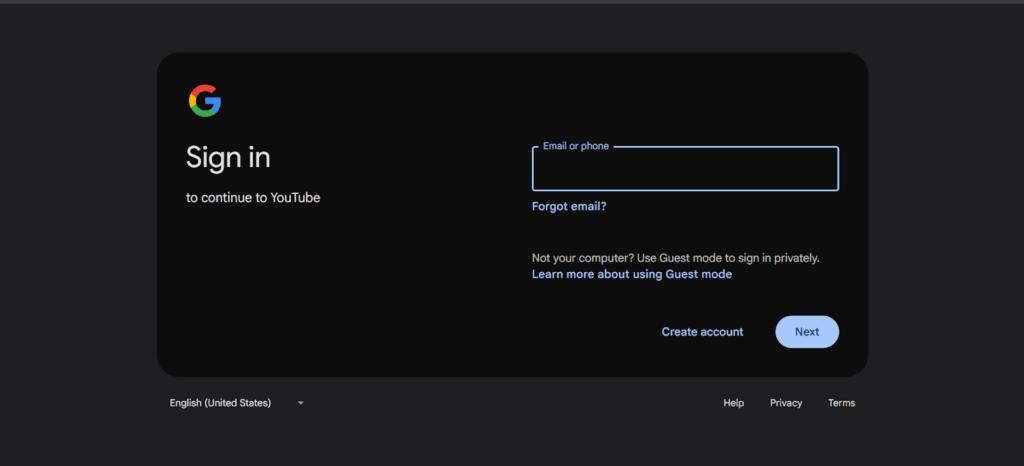
Step 1: To find the Average View Duration of all videos on your channel, simply go to YouTube Studio and sign in to your account.
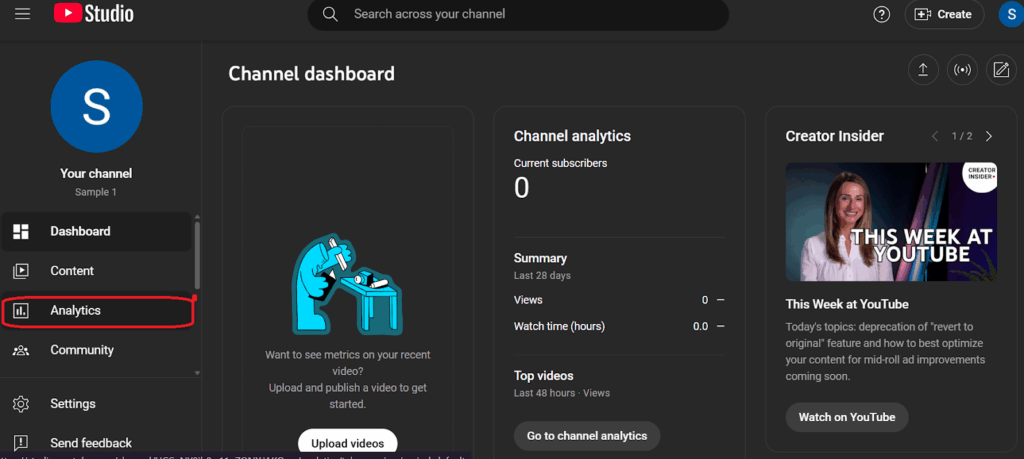
Step 2: Click Analytics in the left-hand corner of the screen.
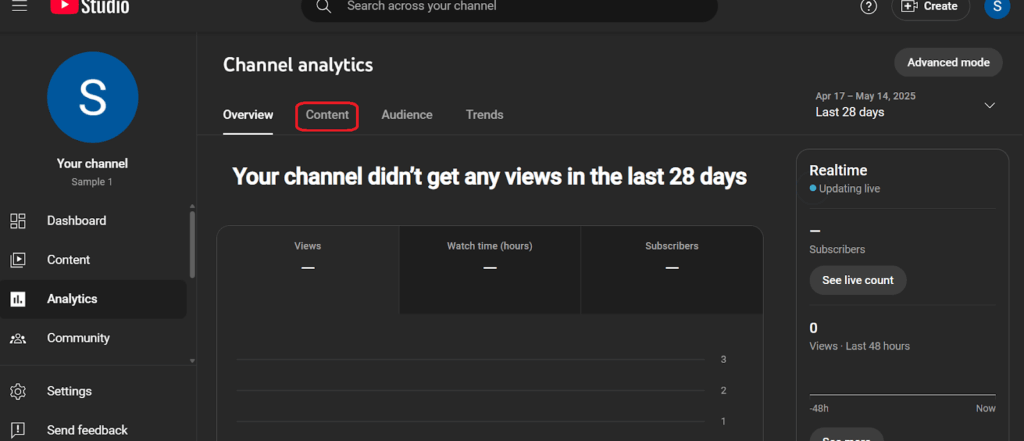
Step 3: Select the Content tab in the analytics dashboard.
Step 4: See your channel’s overall AVD over a specific timeframe in the Average View Duration Tab on the last column.
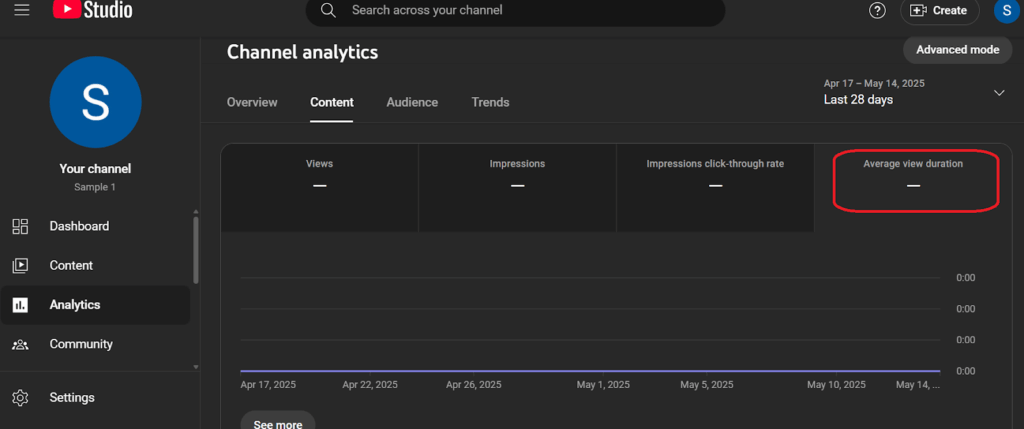
To see the AVD for individual videos:
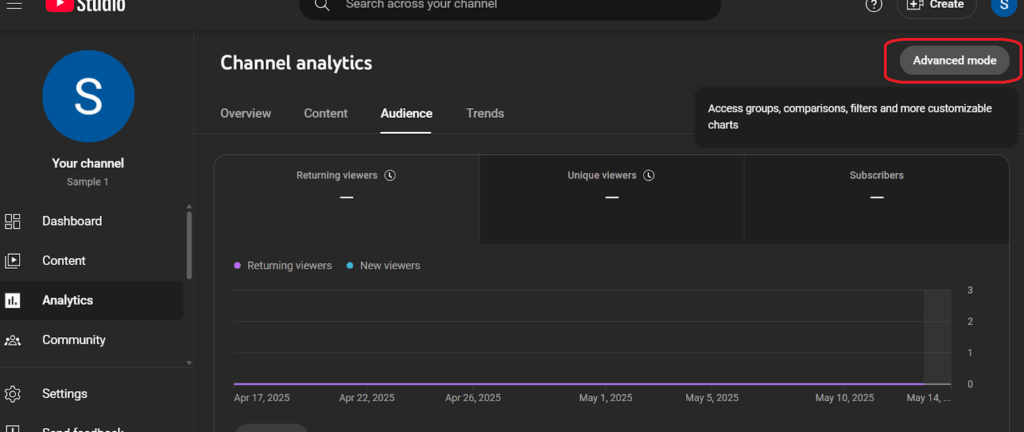
Step 1: Click on the Audience Tab and then select Advanced Mode at the upper right-hand corner of the screen.
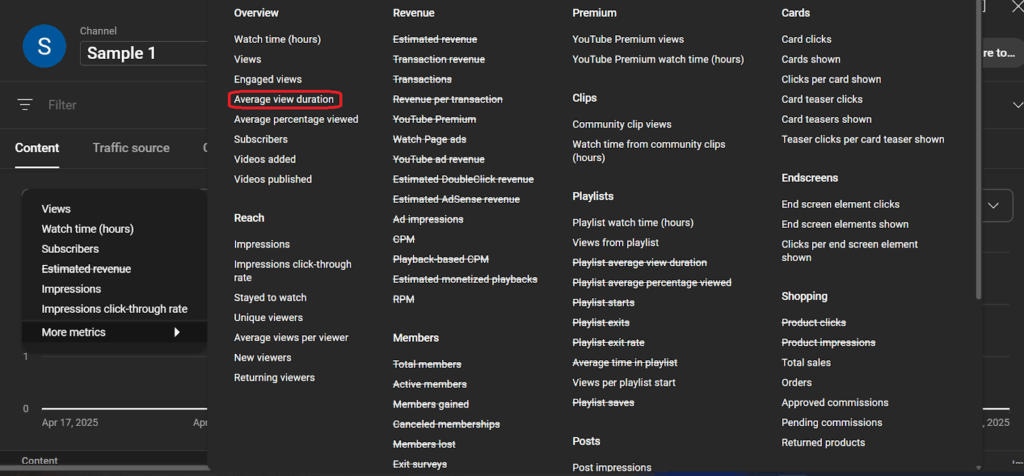
Step 2: Tap the Content tab, navigate to the More Metrics section from the drop-down menu, and then Average View Duration from the list.
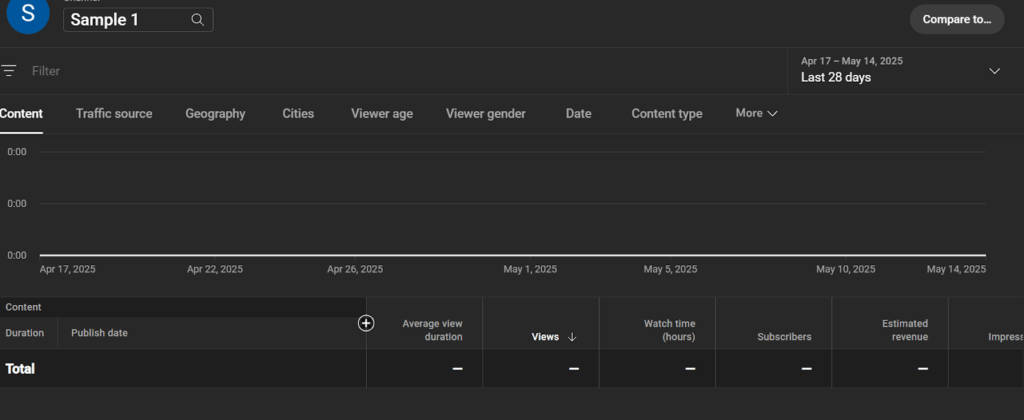
Step 3: You can find the AVD for specific videos.
New Vs Returning Viewers: How This Affects AVD

When it comes to analyzing AVD, new and returning viewers tend to view your videos differently. While a returning viewer or subscriber is more likely to watch till the end, a first time viewer may leave before the end due to not being familiar with the creator or just being confused with the style.
This is why just analyzing generally can be a little misleading. You should instead filter by subscribers and non-subscribers so you can see how each group watches your videos.
You can make better videos by analyzing the AVD for new and returning viewers. If the AVD for non-subscribers is low, improve the hook to make each video more engaging. A higher AVD for subscribers simply means you should encourage visitors to subscribe.
The Proper Way To Analyze AVD
Here is a more effective way of analyzing AVD to understand your audience and content better:
- Analyze the graph to see where viewers drop off. Make that part more engaging, use hook, snappy edits and visuals to keep viewers hooked.
- Check spikes and replays, as these are the parts viewers found highly engaging. You can learn from those parts, copy the style, hook, and visuals.
- Always compare AVD against video length. Having an AVD of 4 minutes does not mean you should make only 4-minute videos. Stick to the best length that ensures your content is understood the most.
What’s a Good Average View Duration?
How do you know a good average view duration? Stick around and you’ll find out as we ‘ll highlight an easy way to determine if your AVD is good enough or if there are lots of improvements to be made.
Knowing what is good and poor will help you set realistic goals and optimize your YouTube content. AVD is typically expressed as a percentage of total video length or in minutes/seconds.
You’ll also find that the Average View Duration varies based on the length of the video and industry. So we’ll be highlighting what a good AVD is across these two factors.
- Short Videos (Under 10 Minutes): AVD of 50-60% is considered strong. For a 5-minute video, this translates to viewers watching 2.5-3 minutes on average.
- Medium Videos (10-20 Minutes): AVD of 40-50% is solid, equating to 4-10 minutes of view time.
- Long Videos (Over 20 Minutes): AVD of 30-40% is respectable, as longer content often sees more drop-offs, meaning 6-8 minutes for a 20-minute video.
To calculate the Average View Duration in percentages: (AVD ➗ total video length) x 100
These percentages reflect the reality that most viewers don’t watch videos in their entirety. YouTube’s algorithm prioritizes relative AVD (percentage viewed) over absolute watch time for ranking purposes, so a high percentage is key, even for shorter videos.
Niche matters significantly. For example:
- Tutorials/How-To Videos: Often achieve 50-70% AVD because viewers seek specific solutions and stay engaged.
- Vlogs: Typically see 30-50% AVD due to their casual, less structured nature.
- Gaming Content: Can range from 40-60%, depending on whether it’s gameplay (longer retention) or highlights (shorter).
- Music Videos: May have lower AVD (20-40%) as viewers might loop or skip sections.
Top-performing channels in competitive niches like tech reviews and fitness often hit 60-70% AVD by mastering hooks and pacing. However, these are aspirational as most creators start closer to 30-40% and improve over time.
Factors Affecting AVD Benchmarks
Several variables influence what’s achievable for your channel:
- Video Length: Shorter videos often have higher AVD percentages because they’re easier to watch in one sitting. Longer videos naturally see lower percentages, even if total watch time is higher. For instance, a 30-minute documentary might have a 30% AVD (9 minutes), which is strong for its length.
- Audience Demographics: Younger audiences may have shorter attention spans, preferring quick, punchy content, while older viewers might engage longer with in-depth tutorials. Location also plays a role as viewers in fast-paced urban areas might drop off sooner than those in less distracted environments.
- Content Type: Narrative-driven content like storytelling or true crime often retains viewers longer due to emotional investment, while informational content like product reviews may see drop-offs once the key information is delivered. Highly visual or dynamic content like animation tends to hold attention better than static talking-head videos.
- Viewer Intent: Search-driven traffic like “how to fix a leaky faucet” often results in higher AVD because viewers are motivated to find answers. On the other hand, browse-driven traffic like suggested videos may lead to lower AVD if the content doesn’t immediately hook viewers.
External factors, like the device used or time of day, also play a role. Mobile viewers make up over 70% of YouTube’s audience and often watch in short bursts, potentially lowering AVD compared to desktop viewers who may watch longer sessions.
Why Your Average View Duration is Low?

While the “good” AVD above are simply industry standards and by no means the absolute figures. However, if your Average View Duration is lower than these figures, it may be due to some underlying problems.
While it is obvious that viewers do not find it engaging enough to watch the video in its entirety, there are more specific reasons for the low AVD. Thankfully, they can be fixed, but first, you need to know why you have a low AVD.
Here, we list some of the common causes of low AVD in videos.
- Weak Intros: Notice viewers drop off within the first 10-15 seconds? Your intro likely fails to hook them. Viewers click away when pacing is slow, value is unclear, or energy is lackluster. Always analyze retention graphs in YouTube Studio to spot early drop-offs.
- Poor Engagement: Sometimes, the delivery is just boring, goes off long tangents and repeats content. Without dynamic visuals, pattern interrupts (e.g., quick cuts), or engaging storytelling, attention decreases. Check retention curves for spikes in abandonment during specific segments.
- Structural Issues: Disorganized videos confuse viewers, causing them to leave. If your content lacks a clear flow or buries the main point, retention suffers. Technical problems like poor audio, low video quality, or excessive ads also drive viewers away.
- Audience Mismatch: If your content doesn’t align with your target audience’s expectations due to misleading thumbnails, titles, or irrelevant topics, viewers won’t stick around. It is time to make better use of YouTube Analytics to ensure your core audience matches your content.
- Algorithmic Challenges: Low click-through rates (CTR) from weak thumbnails or titles can attract uninterested viewers, lowering AVD. Similarly, if your video isn’t recommended to the right audience, engagement drops.
To identify issues, review YouTube’s audience retention charts for drop-off points and test fixes like punchier intros or tighter editing.
External trends, like a preference for short-form content, may also impact AVD, so adapt to your niche’s evolving demands. By addressing these factors, you can boost retention and keep viewers watching longer.
Proven Strategies to Improve Your Average View Duration
To improve your average view duration is easy at face value, simply create engaging content. But how do you create this engaging content that guarantees your viewers watch for longer? The whole point of this section is to show you effective ways to increase your AVD and grow your channel.
Capture Their Attention With The Right Hook
You have the first 5-10 seconds to capture the attention of your viewers before the leave and you must make it count if you want to increase your AVD. hook them with the perfect introduction, question, or visual that makes them want to know more.
Optimize The Video Structure
Make it easier for your audience to watch your video as any friction in the process can lead to drop offs. The idea is to make it possible and even ideal to binge watch your videos. Which is why structure is everything.
You can use a compelling style like storytelling that keeps viewers engaged. Using the Problem, Agitation, Solution (PAS) framework is another popular style to optimize a YouTube video.
Encourage Engagement
To encourage engagement you have to maintain a certain level of energy and enthusiasm in your videos.
Oftentimes, a dull video chases a viewer away faster than you imagine. You can improve engagement and ultimately AVD by using captivating visuals and pattern interrupts to grab and hold attention.
Make Smart Edits
Loose edits are some of the fastest ways of losing your audience. Invest in quality editing to ensure it is tight, the right visuals are used, and it flows seamlessly from one idea to the other, preventing any drop-off. It is little wonder that the best YouTubers outsource their editing to professional video editing services.
Post Consistently
Have a consistent posting schedule and stick to it. Nothing shows seriousness to your subscribers and the YouTube algorithm than a consistent posting schedule. Your audience starts to expect your videos at that specific time, anticipation builds, which leads to better watch time and a stronger community.
Deliver Your Promise Every Video
Your title, description, thumbnail and content are all promising your audience something through the course of every video. Make sure to deliver on all of such promises without fail. Being clickbaity may get you the click, but it just leads to a faster cliff off your video.
Advanced Tips For Maximizing Average View Duration

Sometimes more advanced techniques are required to elevate your Average View Duration (AVD). Here are advanced tips tailored to audience retention and YouTube’s algorithm to implement on your videos and channel:
- Refine Audience Targeting: Create viewer personas based on YouTube Analytics (age, gender, location) to craft content that resonates deeply. Tailor topics, tone, and visuals to their preferences, ensuring longer engagement.
- Curate Playlists for Binge-Watching: Organize videos into thematic playlists to keep viewers on your channel. Promote playlists within videos and use compelling titles to encourage sequential viewing, boosting overall watch time.
- Leverage Trending Content: Capitalize on seasonal events or trending topics using Google Trends or YouTube’s search bar. Create timely videos to attract highly engaged viewers, increasing AVD.
- Collaborate Strategically: Partner with creators in your niche to tap into their audiences. Guest appearances or co-created content can introduce your channel to viewers likely to stay longer, enhancing retention.
- Repurpose for Retention: You can also transform long-form videos into YouTube Shorts to attract new viewers, linking back to your main content. Create highlight clips or teasers that drive traffic to high-value videos, maintaining engagement.
Experiment with these tactics and track results in YouTube Studio. Focus on one or two strategies at a time, like playlist optimization or collaborations, and analyze retention graphs to measure impact.
By aligning content with audience interests and platform trends, you’ll maximize AVD and accelerate channel growth.
Conclusion
Optimizing your YouTube Average View Duration (AVD) is key to boosting engagement, pleasing the algorithm, and growing your channel.
By making compelling intros, refining video structure, and leveraging advanced strategies like playlists and collaborations, you can keep viewers hooked longer.
Start by analyzing your retention graphs in YouTube Studio, implement one or two tactics, and track progress. Consistency and experimentation are your allies as small tweaks can lead to big gains.
For professional support, consider Your Video Editor, a top-tier video editing service with channel management add-ons. Their expert team can enhance your visuals, streamline pacing, and optimize content to maximize AVD, saving you time while elevating quality.