Creators want to grow their YouTube channels as quickly as possible, but this is not always the case. This frustrates a lot of YouTubers as it leads some into trying unethical practices like buying subscribers.
However, YouTube frowns on subscriber buying and puts heavy penalties on defaulters. As a creator, you do not want to be caught buying subscribers.
Surprisingly, despite the risks, many YouTubers still buy subscribers, especially when starting. People see it as a quick solution to growing their channels, even though there are more effective strategies to get their first 1000 subscribers.
If you want your video creation efforts to count, you may want to stay away from buying subscribers for your YouTube channel, and in this piece, you’ll see why you should not consider this option. But that’s not all, you’ll also see how to grow your channel without resulting in buying subscribers.
You’ll also learn how letting Your Video Editor handle your edits is among the most widely used alternatives.
Want to take your videos to the next level?
Why YouTubers Buy Subscribers?
Since the punishment for buying subscribers is already widely publicized, it is normal to wonder why YouTubers still take the risk. Well, there are many reasons why it still seems like a worthwhile risk for some YouTubers to buy subscribers, and we’ll be seeing some of the most prominent ones.
1. Seeking Instant Credibility
Let’s be honest, a channel with 100 subscribers seems less trustworthy than one boasting 10,000. And this is the simple reason new YouTubers often crave social proof as soon as possible.
Potential viewers on YouTube may equate higher numbers with quality, even if those figures are hollow. So creators purchase subscribers to appear established.
This perceived legitimacy can attract organic viewers who might otherwise scroll past a fledgling channel. Yet, this front often crumbles when engagement fails to match the subscriber count.
2. Chasing Monetization Milestones
YouTube’s Partner Program sets a high bar: 1,000 subscribers and 4,000 watch hours within 12 months to unlock monetization. Making money on YouTube requires some initial effort. So creators struggling to hit these thresholds resort to buying subscribers.
The pressure to earn revenue, especially for those investing time and money into content, makes this option enticing. However, fake subscribers rarely contribute watch hours, leaving creators stuck despite inflated numbers.
3. Competing in a Crowded Space
One of the reasons creators buy subscribers is due to the competition in the space. With over 500 hours of videos uploaded every minute on YouTube, visibility is a constant challenge.
Creators face fierce competition, particularly in saturated niches like gaming, beauty, or tech. A boosted subscriber count can create the illusion of popularity, potentially drawing more clicks.
Some believe this edge helps them compete with established channels. But YouTube’s algorithm values engagement over raw numbers, rendering this strategy ineffective.
4. Psychological Boost for Creators
Sometimes, the driving force for buying subscribers is simply psychological. Growing a channel organically is slow and grueling. Seeing subscriber numbers stagnate can sap motivation.
Purchasing subscribers provides a morale lift, a fleeting sense of progress. For creators pouring their hearts into content, this artificial spike can feel like validation. Yet, this temporary high fades when views and comments fail to follow, exposing the gap between reality and illusion.
5. The Mirage of Success
Creators want to feel like they’re succeeding, so they buy subscribers. However, there’s more to YouTube growth than subscriber count.
A channel with thousands of subscribers but only dozens of views raises red flags. These accounts, often bots or uninterested users, do not watch, like, or comment. Creators may initially celebrate their inflated numbers, but the lack of genuine interaction soon reveals the truth.
6. Misunderstanding Brand Expectations
There’s a common belief that brands only care about subscriber numbers. While that may have been true years ago, most brands now look deeper. They analyze engagement, watch time, and how viewers interact with content. Still, the myth persists, and creators feel pressure to inflate their numbers just to appear more appealing for sponsorships or brand deals.
Understanding YouTube Algorithm and How it Spots Bought Subscribers
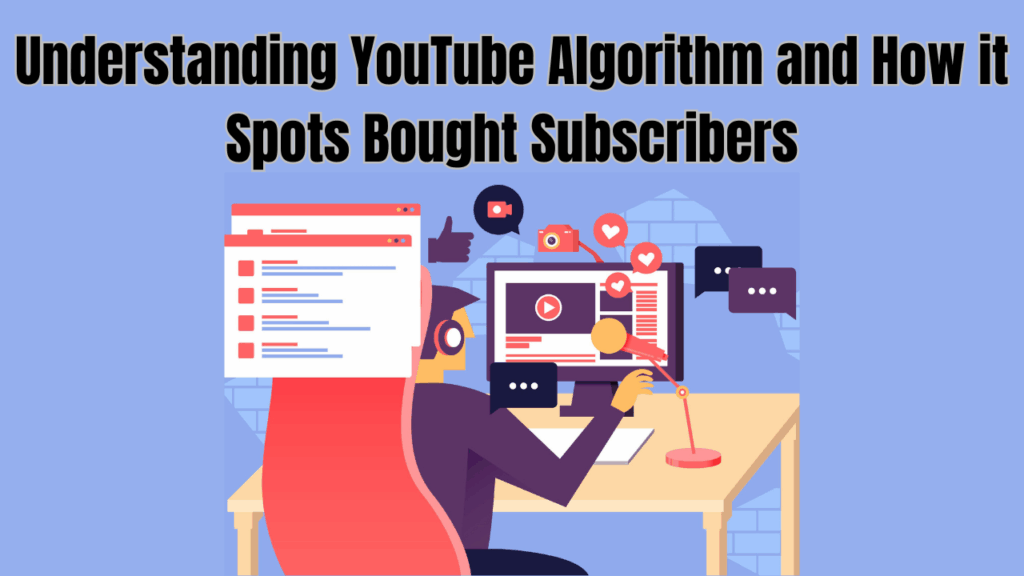
You might be tempted to ask how YouTube will know if you go ahead with buying subscribers for your channel. We have the answers you seek right here in this section, and it is through the help of its ever-evolving algorithm.
The YouTube algorithm is designed to serve one primary goal: show the right video to the right user at the right time. It’s almost as simple as that, but with a few twists, of course.
To achieve this, the algorithm collects and analyzes massive volumes of behavioral data. Every click, pause, comment, and replay tells the algorithm something new. It doesn’t just learn what content performs well, but also when something doesn’t add up. Like bought subscribers.
What the Algorithm Looks For
While understanding how the YouTube algorithm works may take a little more time, here are a few metrics the algorithm tracks that make it pretty effective at not only recommending the right videos but also spotting channels bought subscribers:
- Engagement rates: Likes, comments, and shares per view.
- Watch time metrics: How long people actually stay on your videos.
- Click behavior: Whether subscribers open notifications, click your video from their homepage, or scroll past it.
- Session depth: Whether your video leads to more time spent on YouTube overall.
How The YouTube Algorithm Spots Bought Subscribers
Contrary to popular beliefs, bought subscribers are easy to spot because they rarely behave like real users.
They don’t watch videos regularly, don’t leave comments, and never return. These accounts are often bots or low-quality user accounts used by click farms.
Say you gain 2,000 new subscribers in a day, but there is no change in your view count. YouTube notices this. It compares the spike in subs with your overall traffic, viewer engagement, and retention. If those metrics don’t align, that triggers a red flag.
In some cases, YouTube may perform a subscriber audit, which leads to sudden drops in your numbers. The system removes accounts it deems “inauthentic,” and this often happens silently unless you’re paying attention to your analytics.
Warning Signs YouTube Uses to Flag Suspicious Activity
The algorithm doesn’t just punish a channel at the first sign of cheating. It flags a couple of suspicious activities first before taking action. Here are a few patterns YouTube uses to identify manipulated growth:
- Sharp spikes in subscribers without a traffic source to justify them.
- Low engagement ratio despite a high sub count.
- High unsubscribe rates after uploads.
- Multiple subscribers coming from the same IP range or region, especially non-target markets.
Creators may think they’re flying under the radar, but the algorithm is constantly tracking subtle anomalies. And once your channel falls under suspicion, your content may quietly stop appearing in recommendations, trending sections, or even subscriber feeds.
Consequences of Buying Subscribers on YouTube With The Data to Back It Up

There are steep consequences of breaking YouTube’s fake engagement policy, which covers subscriber buying. If you want to see why buying subscribers is not a great idea, stick around for some of the ways this practice can hurt your channel.
1. Algorithmic Suppression and Reduced Visibility
YouTube’s algorithm is in charge of recommending videos to the viewers but when you cheat by buying subscribers, the algorithm does not pick up your videos. It thrives on engagement metrics such as watch time, likes, comments, and shares, not subscriber numbers.
When a channel inflates its subscriber count with inactive audience or bot accounts, it creates an obvious mismatch between subscribers and engagement. And this discrepancy signals to YouTube that the content lacks value, demoting it in search results and recommendations.
VidIQ made a video showing how YouTube and its algorithm care less about subscribersespecially when they are bought.
The truth is, fake subscribers rarely watch videos, slashing average watch time and click-through rates (CTR). This low engagement buries content, making organic growth nearly impossible.
2. Reducing Engagement Metrics
If you thought buying subscribers was the key to improving your channel’s engagement, then you’re in for a rude surprise when you check your engagement rate in YouTube Studio.
Engagement is the lifeblood of a thriving YouTube channel and is among the most important metrics to track; however, buying subscribers does not help this metric. In fact, it works against it.
It is simple, bought subscribers are often bots or disinterested accounts that don’t interact with videos. This leads to abysmal engagement rates that harm visibility. This creates a vicious cycle where the channel struggles to recover.
Low engagement not only blocks algorithmic promotion but also discourages genuine viewers, who may perceive the channel as inauthentic when they notice minimal interaction relative to subscriber counts.
3. Violation of YouTube’s Policies and Penalties
YouTube takes a firm stance against artificial metrics inflation, explicitly prohibiting the purchase of subscribers in its updated Policy Guidelines.
Channels caught engaging in this practice face severe consequences, ranging from subscriber purges to outright termination. You do not want to fall into any of these categories, as it puts your channel in a bad light even after the ordeal.
YouTube’s 2025 Transparency Report noted the removal of 2.8 million channels for spam violations, including fake subscribers, between January 2025 and March 2025.
Beyond demonetization, creators risk losing their channel entirely. Even a single violation can reset monetization eligibility, forcing creators to restart their journey under stricter scrutiny. Imagine all your efforts into getting monetized only to be set back because you tried to cut corners.
4. Damage to Brand Partnerships and Credibility
You can easily damage your reputation with brands by buying subscribers. These brands prioritize authenticity when selecting creators for partnerships, using tools like Social Blade and HypeAuditor to detect fake subscribers.
So if your channel comes with inflated metrics, a well-run brand and potential sponsor will know, which may cost you that opportunity.
It’s also quite easy to get blacklisted by brands for unethical practices. Several YouTubers like David Dobrik have lost their partnership with brands for various reasons.
Beyond lost deals, inauthentic growth damages a creator’s reputation. Audiences notice discrepancies, such as high subscriber counts paired with low views, leading to skepticism and reduced trust.
5. Financial Losses and Poor ROI
Buying subscribers is not only ineffective but also costly, with prices ranging from $2.5 for 100 low-quality subscribers to $50 for 100 “premium” ones. Prices differ based on the platform, and yes, there are a lot of options.
After spending up to $2000 getting a few thousand subscribers, you would expect some form of reward for your investment, right?
This is where it gets more interesting as you begin to see why the return on investment is quite low. These bought subscribers do not contribute to ad revenue, product sales, or audience loyalty.
Money spent on fake subscribers could be better allocated to tools like VidIQ, professional editing software like Your Video Editor, or paid promotions, which drive measurable growth.
6. Losing Audience Trust
A loyal audience is a channel’s greatest asset, but bought subscribers undermine this foundation. Viewers are savvy and quick to spot inconsistencies, such as a channel with 50,000 subscribers averaging 50 views per video.
Viewers immediately assume these channels are fraudulent and stay away from them. This is something as insignificant as buying subscribers without the engagement to show for it. This erodes credibility and alienates potential fans.
YouTubers know how serious this is and the impact it can have on their audience trust, which is why the A Walk In The Wild Side creator had to make a rebuttal video when he was accused by a commenter of buying subscribers.
Rebuilding trust is arduous, requiring creators to overhaul their content strategy and engage authentically to regain audience confidence. So it is always best to steer clear of it from the get-go.
The Right Way to Grow Your Channel Organically Without Cheating
While buying subscribers is the easy way out, it comes with a lot of risks and is ineffective. Instead of wasting your effort trying to cheat the system, the better route is growing your channel organically using some effective strategies. Here are some ways to get subscribers organically:
1. Making High-Quality Content
Save your time, focus on making compelling videos as they drive organic growth. If you have no editing experience or are looking to reinvest the extra time in your content creation, it is better to outsource your YouTube video editing to services like Your Video Editor.
Invest in striking thumbnails, captivating titles, and engaging storytelling to hook viewers instantly. While making sure you prioritize clear visuals and concise narratives to keep audiences watching longer.
2. Encourage Audience Engagement
Take time out to interact with viewers, whether it’s through lives, Q&As, or answering questions in the comments. The goal is to encourage more engagement so you can transform casual watchers into loyal subscribers.
Engagement signals to YouTube that your content resonates, boosting its algorithmic ranking. Consistent interaction builds a community that champions your channel organically.
3. Leverage Collaborations and Cross-Promotion
To put it simply, partnering with creators in your niche amplifies your reach. So those creator events and meetups you’ve been avoiding may just be what you need to grow your channel.
Collaborate on joint videos or shout-outs to tap into each other’s audiences. Identify creators with similar subscriber counts for mutually beneficial partnerships. But don’t forget to promote your videos across different platforms.
4. Optimize for Search Engine Visibility
You should know that YouTube functions as a search engine, making SEO important for discoverability. And if you want to grow your channel organically, you have to optimize for search and the visibility it comes with. How?
Use tools like TubeBuddy or VidIQ to identify high-traffic keywords relevant to your content. Craft titles and descriptions with targeted keywords while keeping them natural. Make it the full package by adding relevant tags and creating playlists to enhance discoverability.
5. Use YouTube Analytics for Improvement
Data is always vital when growing your channel, and YouTube analytics provides a hub for all your channel’s data. Dive into YouTube Studio to track metrics like audience retention, traffic sources, and viewer demographics.
Regularly reviewing analytics uncovers insights to refine your strategy and align with audience preferences.
Final Thoughts
Buying YouTube subscribers is possible and even easy with a simple search, but it is not advisable to do so.
Not only is buying subscribers ineffective in monetizing your channel or growing your brand it also puts you at risk of severe punishment from YouTube. These penalties range from reduced visibility to an outright ban.
Avoiding this activity that violates YouTube’s engagement guidelines is crucial, especially as there are better, more effective ways to grow your channel organically.
Methods like collaborating with other creators, engaging with your audience, and making high-quality videos have proven to be effective.
When it comes to high-quality content on YouTube, Your Video Editor understands what this means on YouTube. With expert editors to go with it, this service lets you focus on making content while they deliver quality edits, every time.
This way, you can grow organically without having to cheat and put your channel at risk.