Are you looking for the best yoga channel on YouTube, or are you really looking for the channel you'll return to when your back is tight, your schedule is packed, and motivation is low?
That gap matters. Plenty of roundups treat every yoga channel as if it's solving the same problem. It isn't. Some channels are built for absolute beginners who need calm, clear cueing. Others work better for practitioners who want stronger vinyasa, more technical posture work, or a library they can filter by mood, duration, and body area. And if you're an aspiring yoga creator, the best channel to study might not be the one you practice with most. It might be the one that teaches pacing, framing, sound, and consistency.
YouTube has become a global studio, but its primary advantage isn't endless choice. It's fit. The right teacher, class length, and style can make home practice feel sustainable instead of random. This guide gets to that quickly. You'll find the channels that stand out, the trade-offs that matter, and a practical section on what yoga creators can learn from the best-produced channels on the platform.
Table of Contents
- 1. Yoga With Adriene
- 2. Yoga With Kassandra
- 3. Boho Beautiful Yoga
- 4. SarahBethYoga
- 5. Breathe and Flow
- 6. Five Parks Yoga
- 7. Kino Yoga (Kino MacGregor)
- Top 7 YouTube Yoga Channels Comparison
- Production and editing lessons for aspiring yoga creators
- Start Your Practice: Your Mat Is Waiting
1. Yoga With Adriene
If someone asks me for a safe starting point, Yoga With Adriene is still one of the easiest recommendations to make. The channel feels welcoming without becoming vague, and that's harder to pull off than it looks. Adriene's cueing tends to support the person practicing alone in a living room, not the student already fluent in studio shorthand.
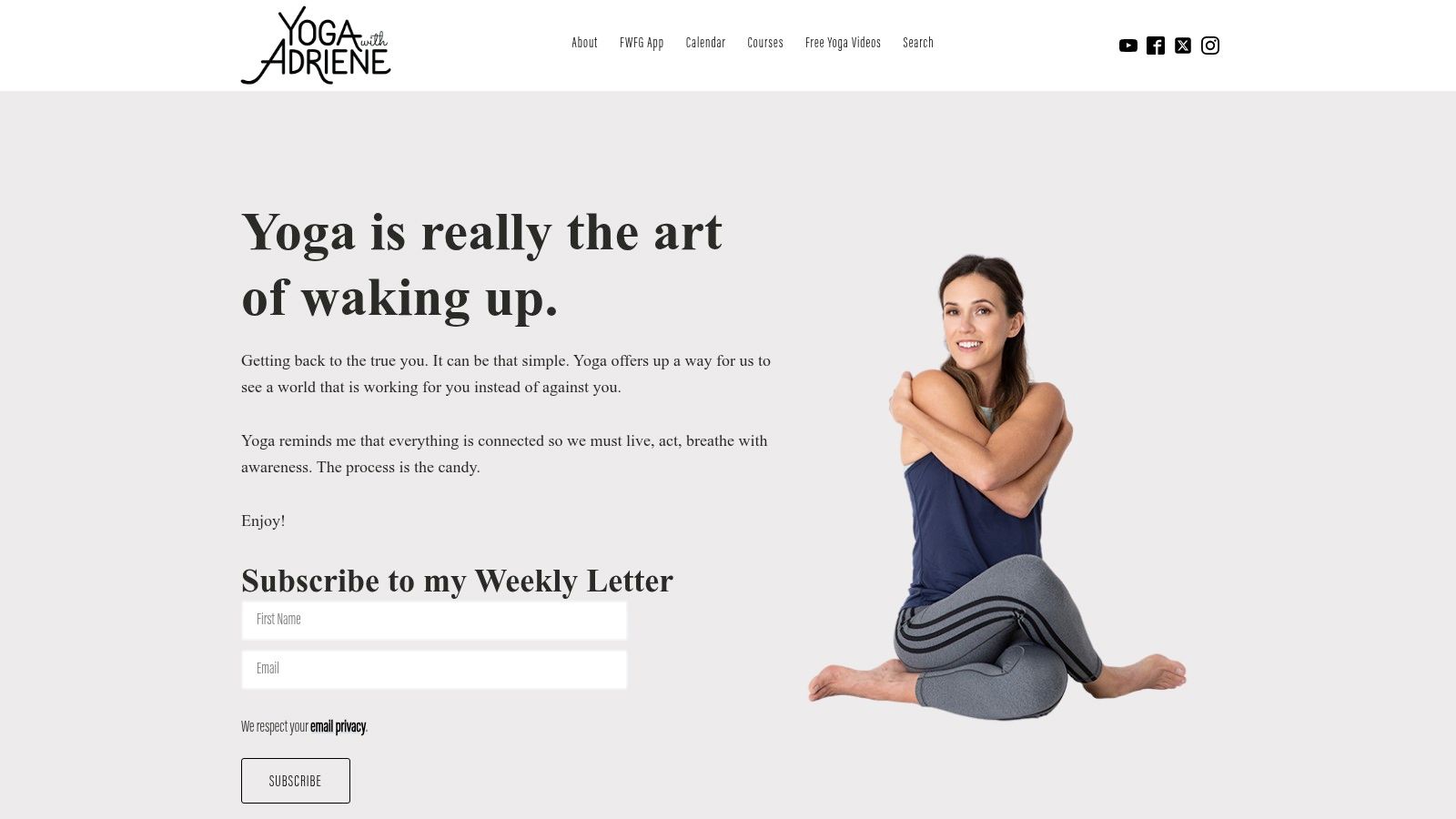
There isn't a single official best yoga channel on YouTube, but Yoga With Adriene is the most-subscribed yoga channel globally, with over 12.5 million subscribers and approximately 1.8 billion total views as of 2024, according to Lifehacker's roundup of yoga YouTube channels. That scale doesn't automatically make it best for everyone, but it does reflect unusual staying power.
Why it works so well at home
The free library covers a wide range of practical needs: gentle flows, stress relief, bedtime sessions, and body-area-focused practices. For beginners, that matters more than flashy sequencing. You don't need to decode the class before you begin.
The consistency tools are a major strength. The channel launched on December 14, 2011, and its Yoga With Adriene official website supports the broader practice ecosystem with calendars, membership options, and structured programs. For people who struggle more with routine than motivation, that structure often makes the difference.
Practical rule: If you're trying to build a daily yoga habit, choose a channel with a calendar or series before you choose one with the most advanced flows.
A lot of longer or more specialized content now sits inside the Find What Feels Good membership. That isn't a flaw, but it is a trade-off. If you want only free content, the channel is still strong. If you want a deeper library and ad-free practice, the paid layer becomes part of the experience.
For aspiring creators, Adriene's brand is also a lesson in clarity and trust. The teaching style, titles, and recurring formats are easy to recognize, which is exactly the kind of foundation that matters when you start a YouTube channel for teaching or wellness content.
2. Yoga With Kassandra
Yoga With Kassandra stands out because it knows what it is. Instead of trying to be everything to everyone, it leans hard into Yin Yoga, steady vinyasa, and practical home practice. That focus gives the library a sense of reliability. When you open the channel, you can usually predict the pacing and teaching style.
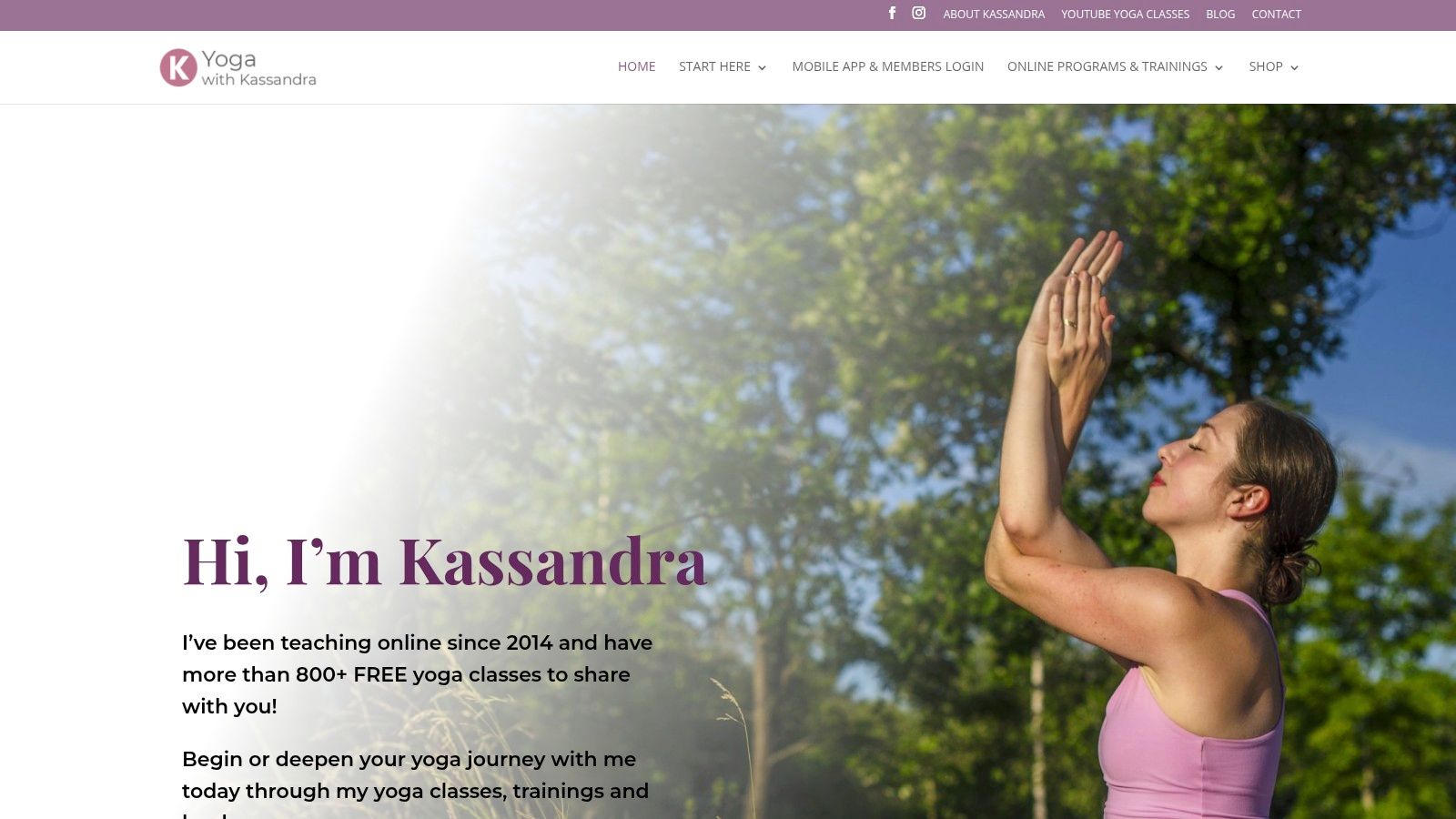
For practitioners who need nervous-system-friendly sessions, mobility work, or a slower practice rhythm, that's a real advantage. Yin can be hard to teach well online because too little guidance feels empty and too much talking breaks the experience. Kassandra generally keeps the middle ground well.
Best fit for Yin and steady home flow
Her Yoga With Kassandra website expands the practice experience with an app, downloadable classes, and structured programs. That makes the channel especially useful for people who like YouTube for discovery but want a more organized system once they know the teacher fits.
What works especially well here:
- Yin depth: The library gives you plenty of choices when your body needs longer holds, recovery, or a less frantic pace.
- Steady delivery: Cueing is calm and measured, which helps at-home students stay with the class instead of constantly checking the screen.
- Good organization: Monthly calendars and app filters support repeat practice better than random browsing.
Very advanced strength work isn't the main draw. If your goal is arm balances, loaded mobility, or athletic progression, another channel may serve you better. But if your body responds well to consistency, softness, and repeatable class formats, this is one of the strongest options.
Kassandra has also spoken publicly about responding to what viewers search for and return to, which matches what successful yoga channels tend to do in practice. That's also why channels like this create viable business models around memberships, programs, and recurring viewers rather than relying only on ad revenue or one-off viral hits. For creators thinking commercially, it's useful to understand how yoga content can make money on YouTube through repeatable formats and audience fit.
3. Boho Beautiful Yoga
Boho Beautiful works best when you want your practice to feel energizing, polished, and visually immersive. The channel blends yoga, Pilates-influenced strength work, meditation, and scenic destination filming. Some practitioners love that atmosphere. Others find it a little too aesthetic-first.
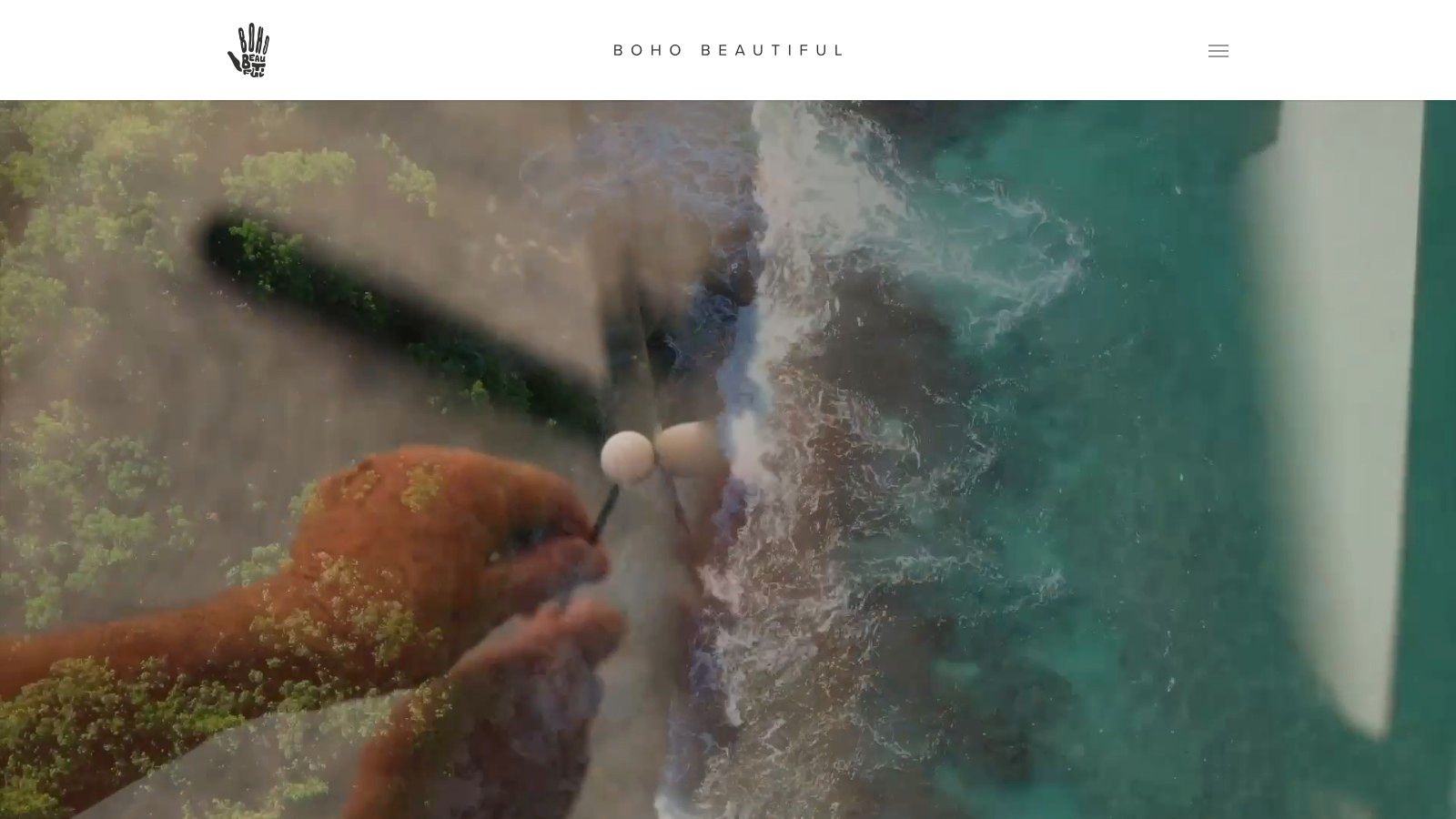
Neither reaction is wrong. If beautiful locations help you show up, that's useful. If you need dense alignment breakdowns, cinematic style won't replace them.
Where production value helps and where it can distract
The big win here is efficiency. Many classes are short, targeted, and easy to slot into travel days or crowded schedules. The channel also blends movement with meditation and breathwork in a way that appeals to people who don't want yoga separated too neatly from overall wellbeing.
A few trade-offs are worth noting:
- Strong for motivation: Scenic filming and polished presentation can make practice feel inviting on days when discipline is low.
- Strong for targeted sessions: Core, mobility, and toning-focused classes are easy to find and easy to repeat.
- Less ideal for technical learners: Traditional alignment explanation can be briefer than what some students need, especially in more fitness-forward formats.
Good yoga video production doesn't just look nice. It reduces friction. You click faster, understand the session faster, and decide faster whether you'll come back.
Their Boho Beautiful platform also offers a broader app-based experience with structured programs and ongoing content. That's increasingly common across yoga brands. Free YouTube brings people in. The paid library gives them progression, continuity, and fewer distractions.
If you're studying the best yoga channel on YouTube from a creator's perspective, Boho Beautiful is worth examining closely. The visual identity is consistent, the thumbnails are recognizable, and the content packaging clearly supports discovery. That's a smart reminder that yoga teachers who care about growth can't ignore YouTube algorithm and SEO basics for content visibility.
4. SarahBethYoga
SarahBethYoga is one of the best examples of low-friction practice design. If you only have a short window, you don't want to spend half of it choosing a class. Her channel removes that problem with direct titling, focused playlists, and sessions that often fit neatly into a morning, break, or evening routine.
The teaching style is clean and efficient. There isn't a lot of extra chatter, which many home practitioners appreciate. You start, move, and finish without feeling like the class is trying to perform for you.
Best for busy schedules and low-friction practice
This channel serves beginners and returning practitioners especially well. If you've been away from yoga for a while, concise classes are often more useful than ambitious ones. Short sessions reduce resistance, and they make consistency easier.
Her SarahBethYoga website extends that approach with a membership and app experience built around plans, calendars, and offline access. That organization matters because people who practice at home often fail not from lack of interest but from decision fatigue.
A few practical observations:
- Best for time-boxed routines: Short classes make it easier to keep a promise to yourself on busy days.
- Best for targeted needs: Goal-based titles help when you know exactly what you need, such as neck, shoulders, morning movement, or winding down.
- Less ideal for long immersive sessions: If you want regular studio-style classes with a longer arc, the free channel may feel too brief.
This is the kind of channel I recommend to people who keep saying they want to start yoga again but haven't found a realistic entry point. A ten-minute class with clear labeling often beats an excellent sixty-minute class you'll never press play on.
5. Breathe and Flow
Breathe and Flow is for practitioners who want yoga to build capacity, not just create a pleasant stretch. The teaching leans into functional movement, strength-oriented vinyasa, mobility, and at times a more athletic sensibility. If you're looking for softness first, there are gentler choices on this list. If you want challenge with purpose, this channel deserves attention.
What I like here is that the challenge usually has structure behind it. The sequencing tends to feel intentional rather than random intensity for its own sake.
Who will benefit most
This channel fits well for students interested in movement crossover. That includes people who care about posture, handstand work, men's yoga, martial arts mobility, or stronger full-body practice. The material has more progression than many general yoga channels, which makes it useful if you get bored by repeating only beginner flows.
The Breathe and Flow practice platform extends that with app-based filters, ad-free viewing, exclusive material, and community features. That broader ecosystem makes sense because this style benefits from progression pathways.
Here are the main trade-offs:
- Great for strong practitioners: If you want mobility and strength to develop together, the programming makes sense.
- Great for people who like goals: Skill-focused collections help when you want more than "do some yoga."
- Harder for absolute beginners: New students should start with clearly marked beginner options, not jump into the stronger classes at random.
Coaching lens: A demanding class isn't better than a simple one. It's better only if you can recover from it and return tomorrow.
The channel can feel intense if your baseline is very low or if you're using yoga mainly for decompression. But for practitioners who want a more physically ambitious home practice, it fills a gap that many broad lifestyle channels don't.
6. Five Parks Yoga
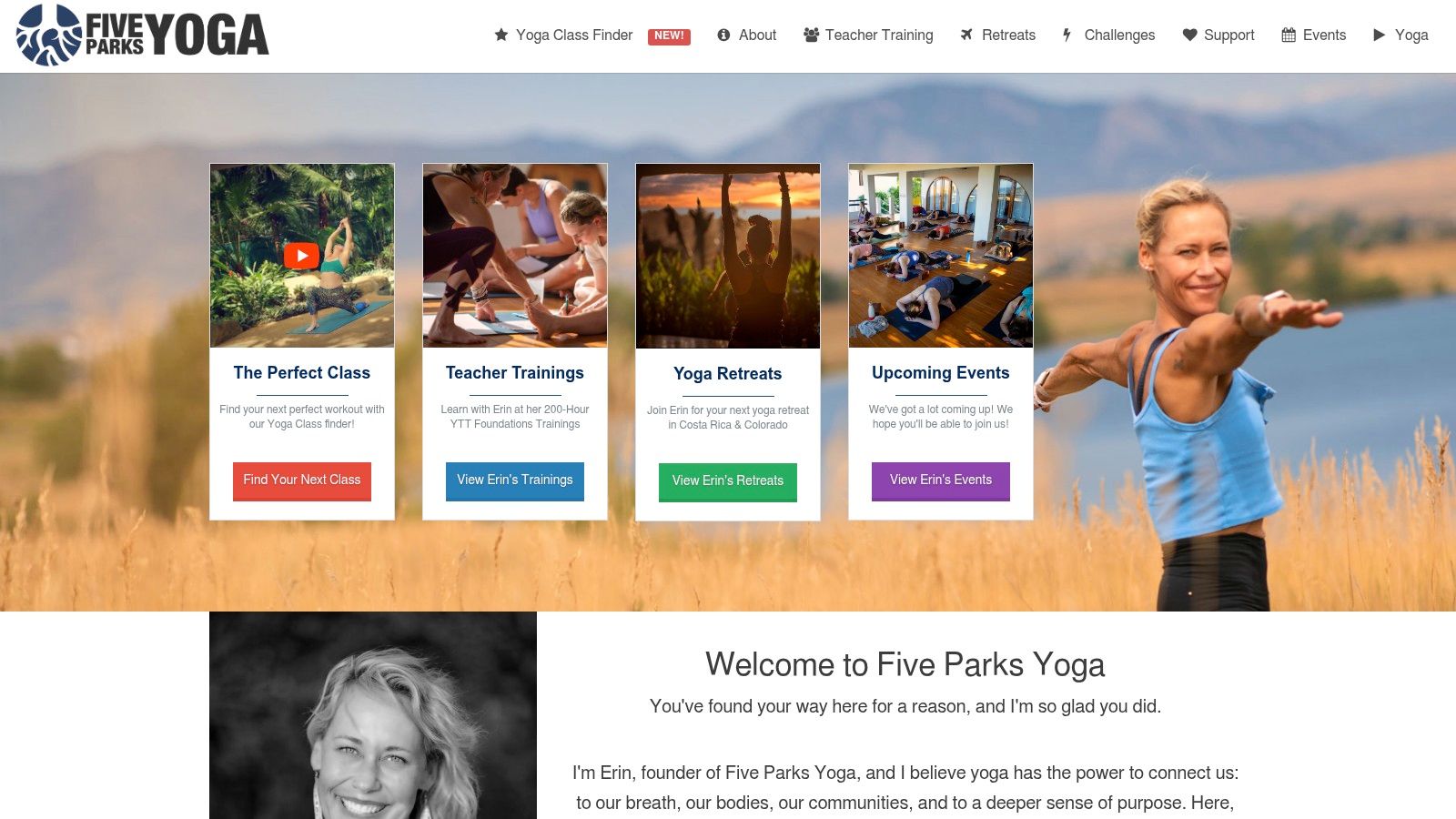
Five Parks Yoga feels closest to an at-home studio class. Erin Sampson's delivery is calm, steady, and generally free of unnecessary interruption. If your ideal practice is to roll out the mat, follow a full session, and not think about production tricks or personality branding, this channel has a lot to offer.
That style isn't trendy, but it ages well. Plenty of practitioners eventually stop wanting novelty and start wanting dependable full-length classes they can trust.
Why longer classes matter
Longer classes create a different relationship with practice. You have more time to warm up gradually, stay in a theme, and settle mentally. Short yoga videos are useful, but they often compress the experience into "fix this body part quickly." Five Parks keeps more of the arc you'd expect in a studio.
The Five Parks Yoga website also supports retreats, trainings, and community offerings, which shows how the channel connects to a larger teaching practice. That matters for students who eventually want more than follow-along videos.
What stands out most:
- Studio-style pacing: Great for practitioners who don't want everything optimized for speed.
- Minimal distraction: Scenic locations are present, but they don't overwhelm the class itself.
- Reliable long-form options: Better for immersive home sessions than channels built mostly around quick hits.
The downside is obvious. If you need a ten-minute slot before work, this won't always be the easiest fit. And if you want very detailed posture labs, the cueing is more straightforward than technical.
Still, for a lot of intermediate home practitioners, this is one of the most satisfying channels on the list because it respects practice time instead of just content consumption time.
7. Kino Yoga (Kino MacGregor)
Kino MacGregor serves a different need from most mainstream yoga channels. If you're drawn to Ashtanga, lineage-based teaching, technical posture work, and deeper study, Kino Yoga offers substance that more general channels often don't. The tone is less "drop in for a quick wellness reset" and more "commit to the discipline."
That distinction matters. Not every practitioner wants that level of rigor, and not every body needs it at every stage.
Best for serious Ashtanga study
The Kino Yoga website connects viewers to Omstars, where structured classes and live study expand the YouTube experience. That ecosystem suits students who want a path from free exploration into a more formal, ongoing practice container.
What makes this channel valuable is specificity. Kino doesn't dilute the material to appeal to everyone, and that clarity is a strength. Technical students often need repetition, method, and context more than broad accessibility.
A few things to know before you commit:
- Excellent for method-based learners: If you like understanding why a sequence works and how a posture develops, you'll find more depth here.
- Better for intermediate curiosity and beyond: Complete beginners may find the pace, vocabulary, or physical demands more rigorous than they want.
- Best when paired with patience: This style rewards steady study more than casual class-hopping.
Some channels help you practice more often. Others help you study more seriously. Kino Yoga clearly belongs in the second group.
If your idea of the best yoga channel on YouTube includes philosophy, technical breakdowns, and a stronger relationship to tradition, Kino is one of the most compelling picks on the platform.
Top 7 YouTube Yoga Channels Comparison
| Channel | Complexity 🔄 | Resources & Access 🔄 | Speed & Efficiency ⚡ | Outcomes & Advantages ⭐📊💡 | Ideal Use Cases 💡 |
|---|---|---|---|---|---|
| Yoga With Adriene | Low, beginner-friendly, gentle progression 🔄 | Large free YouTube library; FWFG membership for extended content (paid) 🔄 | Moderate, mix of short and mid-length classes; strong habit tools (calendars/30-day series) ⚡ | Balanced mobility, breathwork, gentle strength; reliable for consistency ⭐⭐⭐⭐ | Absolute beginners and those seeking a welcoming, consistent home practice |
| Yoga With Kassandra | Low–Medium, steady pacing, accessible for most 🔄 | Robust free channel; app offers downloadable classes, filters and paywalled programs 🔄 | Variable, many long Yin holds and levelled vinyasas; moderate efficiency ⚡ | Excellent for Yin and mobility; calm, structured Vinyasa offerings ⭐⭐⭐⭐ | Practitioners who want to explore Yin or calm, structured Vinyasa flows |
| Boho Beautiful | Medium, fitness-forward sequencing with Pilates influence 🔄 | Free YouTube content; app with on-demand programs and paywalled challenges 🔄 | High, time-efficient, targeted classes ideal for travel/busy schedules ⚡ | Visually engaging, core/toning focus; combines mindfulness with fitness ⭐⭐⭐ | Users motivated by cinematic visuals and fitness-focused yoga/Pilates blends |
| SarahBethYoga | Low, concise, clear, goal-based instruction 🔄 | Free short videos; membership/app expands library and offers offline downloads 🔄 | Very High, primarily 5–30 minute practices for tight schedules ⚡ | Great for habit formation and time-boxed goals; precise cueing ⭐⭐⭐⭐ | Busy individuals needing short, effective, goal-oriented sessions |
| Breathe and Flow | Medium–High, strength-oriented sequencing with progressions 🔄 | Extensive free library; large paid membership/apps with 700+ ad-free & exclusives 🔄 | Moderate, program-driven; variable class lengths and structured progressions ⚡ | Builds functional strength, mobility, and advanced skills; strong community support ⭐⭐⭐⭐ | Intermediate/advanced practitioners focused on strength, mobility, and performance |
| Five Parks Yoga | Medium, calm, uninterrupted studio-style instruction 🔄 | Many full-length classes free on YouTube; retreats/trainings available via site 🔄 | Low, long classes (45–75 min) for full practice; less for quick sessions ⚡ | Studio-style, uninterrupted flows for sustained practice and momentum ⭐⭐⭐⭐ | Those seeking traditional studio-length classes at home (45–75 min) |
| Kino Yoga (Kino MacGregor) | High, technical Ashtanga focus and disciplined pacing 🔄 | YouTube tutorials; Omstars subscription for structured on-demand study and live classes 🔄 | Low–Moderate, thorough, technical classes not optimized for quick sessions ⚡ | Deep Ashtanga training, pose breakdowns, strength and flexibility development ⭐⭐⭐⭐ | Intermediate to advanced students pursuing technical Ashtanga study and disciplined practice |
Production and editing lessons for aspiring yoga creators
What makes a yoga channel feel trustworthy before a student has even finished the first class?
Teaching carries the practice, but production shapes whether students can stay with it. Good filming and editing help people hear the cue at the right moment, see the body clearly, and settle into the pace without distraction. Poor production breaks concentration fast, especially in yoga, where viewers often glance away from the screen and rely on the voice to guide them.
The strongest channels in this list teach a useful lesson for creators. Clear instruction matters most, but presentation still changes the student experience in a real way. Adriene's approachable structure, Kassandra's calm pacing, Five Parks' readable framing, and Kino's technical demonstrations all show the same principle. Production choices should serve the practice style, not copy a trend.
What strong yoga videos get right
Audio comes first.
If students cannot hear breath cues, alignment reminders, or transition timing, the class loses value no matter how good the camera looks. A simple lav mic, consistent audio levels, and a quiet room usually help more than buying another lens.
Framing is next. Students need to read shape, direction, and range of motion without guessing. That usually means a stable wide shot for full follow-along classes, with closer angles saved for short tutorials or pose breakdowns. Too many camera changes make practice feel choppy.
Titles and packaging matter too, especially on YouTube. Students choose classes based on immediate needs, not abstract branding. "20-Minute Morning Yoga for Stiff Hips" works better than a vague creative title because it tells the right viewer exactly what the session is for.
A few habits consistently help creators build a better library:
- Name classes clearly: Include style, duration, level, and focus.
- Use a consistent thumbnail system: Viewers should recognize your videos at a glance.
- Organize classes into paths: Beginner series, weekly calendars, and skill progressions reduce decision fatigue.
- Keep intros short: Returning students usually want to start practice quickly.
Editing choices that help practice
Yoga editing works best when it feels quiet and intentional. Fast cuts, dramatic zooms, and heavy effects often pull attention away from breath and alignment. A calmer edit usually supports retention because students can stay in their bodies instead of tracking the edit.
Timing deserves special care. If the spoken cue comes after the movement demo, beginners fall behind. If every pause gets trimmed out, students never have enough space to arrive in a pose safely. Good yoga editing removes confusion, not breath.
Music needs restraint. Some classes benefit from silence or natural room tone. Others work with soft background music. In either case, the voice should stay clear and forward.
For creators who want a practical production standard, focus on these choices:
- Match cue timing to movement: Verbal instruction should lead the action clearly.
- Edit lightly in follow-along classes: Cut setup delays and mistakes, but keep the rhythm natural.
- Color-correct for readability: Even, natural light helps students see alignment better than stylized grading.
- Design for repeat viewing: Limit long logo sequences, loud intros, and graphics that interrupt the start of class.
- Plan for multiple formats: One full practice can also produce shorts, tutorials, pose clips, and thumbnail variations if filmed cleanly from the start.
That final point matters for aspiring yoga creators. Building a channel now is not only about teaching well on camera. It also means creating a repeatable content system that supports long classes, discoverable clips, and a consistent visual identity. The teachers who grow without burning out usually treat production like part of the practice. Simple workflow, clear standards, and restrained editing beat flashy output every time.
Start Your Practice: Your Mat Is Waiting
Which yoga channel will earn a place in your weekly practice?
The best yoga channel on YouTube depends on your body, your schedule, your goals, and the kind of guidance that keeps you steady enough to return tomorrow. A channel can be popular, beautifully shot, or highly technical and still be the wrong fit for where you are right now.
Yoga With Adriene suits practitioners who want warmth, clear entry points, and a practice they can keep up at home. Yoga With Kassandra works especially well for students who want Yin, slower pacing, and a calmer rhythm. Boho Beautiful often appeals to people who stay motivated by strong visuals and more fitness-oriented flow. SarahBethYoga is useful for busy practitioners who need short classes that remove the usual excuses.
Breathe and Flow serves students who want strength, challenge, and a more athletic progression. Five Parks Yoga gives home practitioners the feel of a longer studio class with grounded teaching. Kino Yoga stands out for Ashtanga students and for practitioners who want more precision, discipline, and technical depth.
Consistency matters more than ambition.
A ten-minute class you complete three times a week will usually do more for your practice than an advanced hour-long session you keep delaying. The right channel should make your next class easy to choose. It should also match your current energy, not the version of you who always has extra time, focus, and motivation.
Test two or three channels with different strengths. Practice with them at the hour you roll out your mat. Pay attention to cue timing, pacing, pose setup, and whether the teacher's voice helps you settle or pulls you out of the experience. For aspiring yoga creators, this same test is useful in another way. You can feel what works as a student, then study how framing, editing, audio, and class structure support that result on screen.
If you're building a yoga channel, course library, or wellness brand, Your Video Editor can help you publish polished classes consistently without taking editing, thumbnails, graphics, and review management onto your own plate. Their workflow supports creators who need reliable turnaround, clear revisions, and video assets that match their brand.
Your mat does not need the perfect channel. It needs one you will return to.